|
|
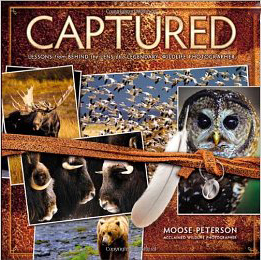
Captured: Lessons from
Behind the Lens of a Legendary Wildlife Photographer/B. Moose
Peterson, Berkeley: New Riders, 2010
(396 p.)
|
Having heard anecdotal stories about Moose Peterson and
looking at the title of this book, I approached it with some trepidation. I wasn’t sure whether this was going to be a
chest pounding treatise on how “good” Peterson’s photography is or a book so
technical that I would put it on the shelf after reading the first
chapter. After reading it from cover to
cover, I have to admit I was pleasantly surprised with the content and would
recommend the book to most wildlife photographers.
There are some concerns with the book so let’s get those out
of the way first:
1)
If you are looking for a step-by-step
instruction book, this is not it.
Technical details and “rules” are not the emphasis of this book. Some material also assumes some basic
knowledge which may make the book less than optimal for a beginning wildlife
photographer.
2)
The book contains lots of photos but is printed
on a matte paper which, for some, detracts from the photo quality. Personally I did not find this to be a
problem because I purchased the book for content, not to use as a coffee table
book
3)
Peterson is a Nikon shooter so if you use
equipment from another manufacturer some of the details will need to be translated
into what fits your equipment. Again, I
did not find this to be problematic since equipment options from Nikon and
Canon are similar. At the same time,
several pages are devoted to screen shots of Nikon menus which are not useful
to people who do not use Nikon equipment.
Having that out of the way, I found about 90% of this book
to be highly enjoyable. Peterson is at
his best when telling stories of projects he has worked on and describing
events and the environment. Interspersed
with these folksy tales are bits of technical wisdom that wildlife
photographers may find highly useful (I have already made a couple of changes
based on ideas he presented). Where the
book does not shine is when he attempts to go deep into theory or
technology. Luckily, Peterson warns you
about this in the text.
While the book is long (396 pages, not the 312 shown on
Amazon’s site), there are few, if any, pages without one or more photos. Peterson uses these photos to compare “good”
with “better”. While admitting to not
deleting “bad” photos, Peterson also says you will never see the “bad”. These photos also make this book one that you
can pick up and browse for enjoyment without reading a word of text other than
the photo captions.
As I said earlier, I would recommend this book to almost
anyone interested in wildlife photography.
My only caveat would be that the beginner looking for a “how to” guide
may be disappointed.